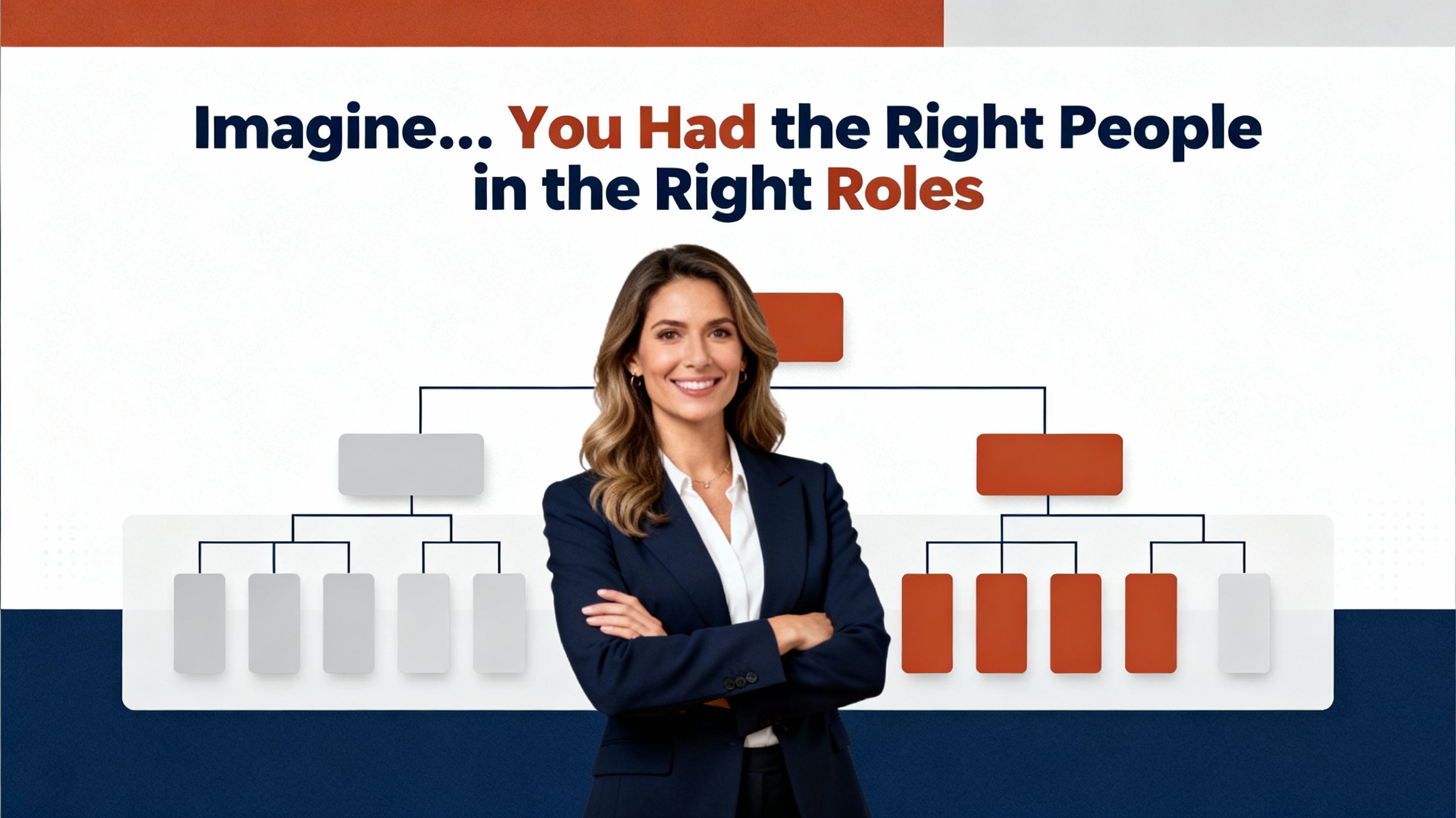
Imagine...You Had The Right People in the Right Roles
Imagine...You Had the Right People in the Right Roles
If you’re leading a small business, chances are you’ve felt the friction that comes when talented people are "busy" but the needle isn’t moving. Growth plateaus. Accountability blurs. Owners end up firefighting. The core problem? Most org charts start with people, not the real work that needs doing.
The Breakthrough: Functional Org Structure
High-performing teams don’t design their organizations around the personalities and tenure of their people. They start with the functions that matter most for growth. A true functional org chart puts focus on core business systems like marketing, sales, operations, customer excellence and finance. Then they assign clear accountability for each role. Only after defining these roles do you look for the right A-Players to fill them.
Why “Function First” Wins
When roles are built around business needs, skill and accountability matter more than comfort zones or past titles.
Each team member knows exactly “who owns what,” eliminating confusion and finger-pointing when projects slow or mistakes happen.
The structure adapts to the needs of the business, not the preferences of individuals.
A-Players in the Right Roles
In the Metronomics Growth System, “right people, right roles” is about more than team spirit or loyalty. It’s about purpose, accountability, coaching, recruiting, developing, and retaining A-Players.
Scorecards: Every role has a living scorecard which includes its purpose, 3–5 core accountabilities, the competencies required, outcome metrics, and direct connection to your values.
Key Function Flow Map (KFFM): Map every major business function, identify bottlenecks, and assign clear ownership and operational status.
Assessment: Review regularly, not once a year, to ensure each person is a fit for the role and the role itself is still what the business needs.
Client Story: Function Over Friendship
Last year, I partnered with a CEO dealing with stalled growth and rising frustration. Their org chart was built around legacy hires, not what the business truly required. Working together, we mapped a functional org structure and moved people into roles where they could excel or, in some cases, thoughtfully parted ways. Results came quickly. A 20% increase in revenue run rate within twelve months. Growth came from a focus on necessary functions and willingness to make hard, but respectful, decisions.
Signs You Need This
"Everyone wears too many hats, and no one really owns outcomes."
"Roles are assigned by history, not by strategy."
"Top performers feel stuck and leaders can’t get out of daily operations."
Practical Actions for the Week
Map your team by functions, not names. What roles do you need to drive your next stage of growth?
Build or update scorecards for every role. Define what success looks like and how to measure it daily.
Hold honest 1:1 conversations. Where are people thriving? Where are skills mismatched with roles?
Tie role outcomes directly to business metrics so each win has visible impact.
Trusted-Adviser Perspective
The real unlock for growth isn’t luck or hustle. It’s building your team, deliberately, for the business you want. That means courage. First design a structure built for growth, then place your A-Players where they’ll make the biggest impact. Don’t start with old titles. Start with the functions you truly need. With the right structure and daily accountability, you’ll finally see predictable progress.